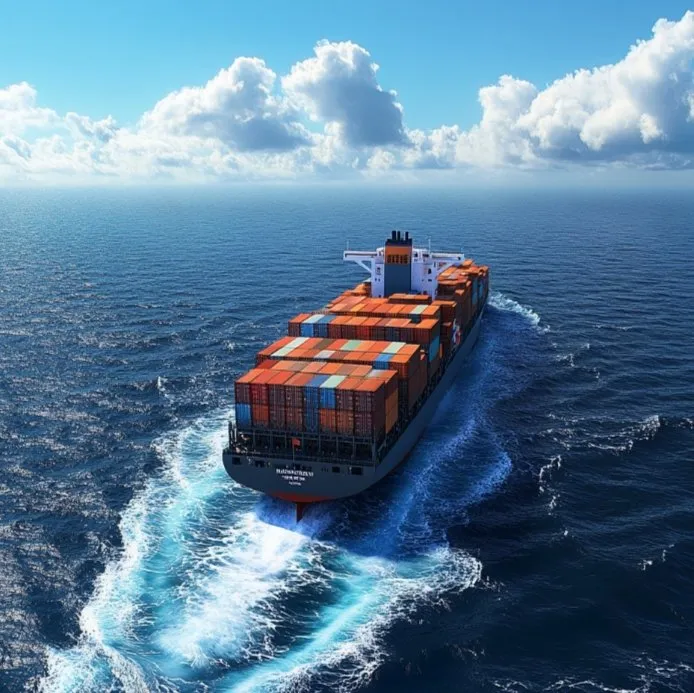
LCL shipping from China to USA is the standard way to move small and medium ocean freight that does not fill a full container. LCL (less than container load) lets you share container space and pay only for the volume you ship. For most shipments between roughly 1 and 15 CBM, total door-to-door cost typically lands in the range of a few hundred to a few thousand US dollars, and transit runs about 20 to 30 days to the US West Coast or 32 to 45 days to the US East Coast.
This guide gives you the framework to estimate cost, plan timing, and decide whether LCL or FCL fits your order, with deeper detail on forwarder selection, the Los Angeles lane, and transit stages covered in dedicated pages.
What Is LCL Shipping from China to USA?
LCL stands for less than container load. Instead of booking an entire 20ft or 40ft container, your goods are consolidated with other shippers’ cargo at a Container Freight Station (CFS) in China, loaded into a shared container, and deconsolidated at the destination port. You are charged for the space your cargo occupies, not the whole box.
This model suits importers who ship in batches rather than bulk. A typical LCL shipment falls between 1 CBM and 15 CBM. Below about 1 CBM, courier or air may be simpler; above roughly 15 CBM, a full container often becomes cheaper per unit. LCL is especially common for e-commerce replenishment, trial orders with new factories, and businesses that want to keep inventory lean without committing to a full container.
When LCL Makes Sense (and When It Does Not)
Choose LCL when your goods occupy less than about 13 to 15 CBM, when you need to split a supplier’s production into several smaller deliveries, or when you are testing a new product line and do not want a full container of unproven stock. LCL also works well for recurring small replenishments that keep Amazon or wholesale inventory flowing.
LCL is less ideal when a single order approaches the volume of a full container, when cargo is unusually heavy for its size (dense goods can hit the weight break even at low volume), or when you need the fastest possible ocean transit with minimal handling. In those cases a full container (FCL) usually wins on both price per unit and speed. The LCL versus FCL breakpoint is covered in more detail below.
How LCL Cost Is Calculated: The W/M Rule
LCL freight is priced on a weight-or-measurement (W/M) basis. The carrier charges whichever is greater: the actual weight in metric tons or the volume in cubic meters, where 1 CBM equals 1,000 kg. If your cargo is 2 CBM but weighs 3,000 kg, you are billed for 3 freight tons; if it is 5 CBM and 800 kg, you are billed for 5 freight tons.
That single rule explains most “why is my quote higher than expected” surprises. Light but bulky goods (pillows, display units) are charged by volume, while dense goods (hardware, tiles) are charged by weight. Always confirm which basis a quote uses before comparing two forwarders.
The Full Cost Structure of LCL from China to USA
A complete LCL shipment is more than the ocean freight line item. The total usually includes:
- Origin handling at the Chinese CFS (receiving, consolidation, documentation).
- CFS consolidation fee for packing your goods with others in the container.
- Ocean freight from the Chinese port to the US port, priced on the W/M basis above.
- Destination charges at the US port, such as CFS deconsolidation, DDC, and terminal handling.
- Customs clearance and any duties or tariffs applicable to your product.
- Last-mile delivery from the port to your warehouse, 3PL, or FBA destination.
Reference ranges vary widely by lane, season, and cargo, so treat any number as a planning estimate and confirm with a live quote. The key point is to evaluate the all-in delivered cost, not just the ocean line. A transparent China to USA freight forwarder will itemize each of these so the landed total is clear before you commit.
Transit Time Overview: US West vs US East
On the water, LCL from South China to the US West Coast typically takes about 14 to 20 days; adding origin consolidation, customs, and delivery, door-to-door runs roughly 20 to 30 days. To the US East Coast, ocean transit is about 28 to 38 days, with door-to-door around 32 to 45 days. Gulf and southern ports fall between these ranges.
These are planning ranges, not guarantees, because LCL also waits on consolidation and deconsolidation. For a stage-by-stage breakdown of exactly where the days go and how to compress them, see the dedicated guide on how long LCL shipping from China to USA takes.
The 8-Step LCL Shipping Process
- Plan the shipment with your supplier: dimensions, weight, ready date, and Incoterms.
- Book with a forwarder and receive the confirmed rate and cut-off dates.
- Deliver goods to the CFS in China (or have the forwarder collect from the factory).
- Export clearance and consolidation with other LCL cargo.
- Ocean transit to the US port of discharge.
- Arrival and deconsolidation at the destination CFS.
- US customs clearance and any duty payment.
- Last-mile delivery to your final address or fulfillment center.
LCL vs FCL: Finding the Cost Breakpoint
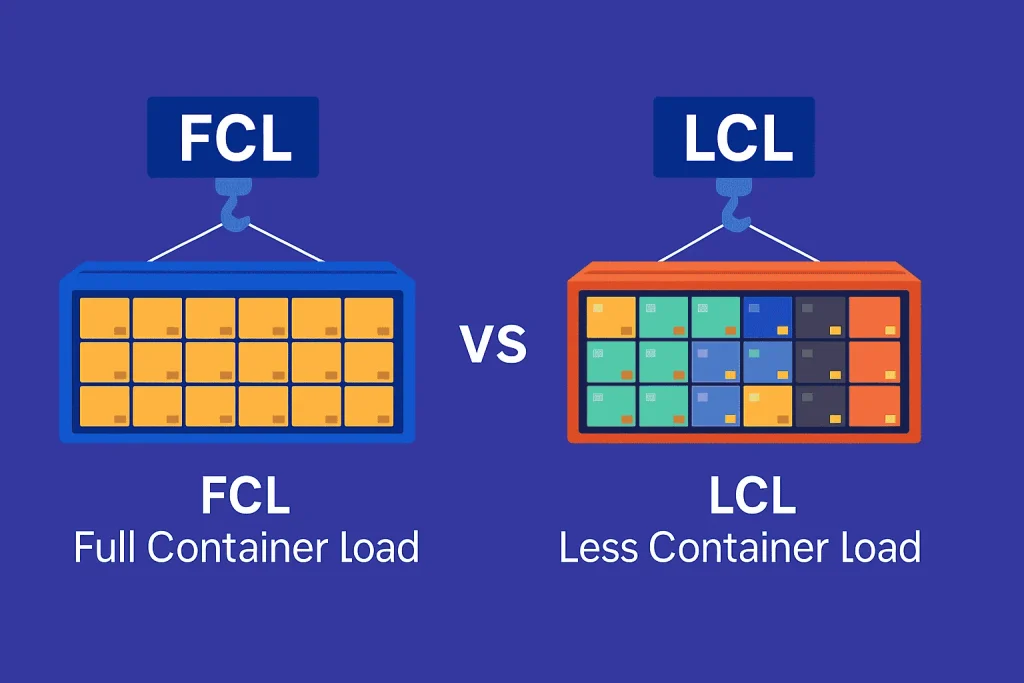
The most common question is whether to share a container or book your own. As a rule of thumb, once your cargo reaches about 13 to 15 CBM, the per-unit cost of a full container usually drops below LCL, and you also avoid CFS handling on both ends plus the consolidation wait. Below that volume, LCL is almost always the better value.
FCL also reduces handling and can be a few days faster because there is no consolidation or deconsolidation step. The trade-off is paying for empty space. Plot your volume against the two quotes; the crossover is typically in the low-teens CBM range, though dense or time-critical cargo can shift the math.
Choosing a Lane and Destination Port
Most China LCL flows into the US through Los Angeles and Long Beach, which handle the largest consolidation volumes and offer the shortest transit from South China. The route from Guangzhou, Shenzhen, and Nansha to LA/LB is the busiest and most price-competitive. Other gateways serve the East Coast and Gulf, but usually with longer transit and higher all-in cost.
If your goods land in Southern California, the LCL shipping to Los Angeles from China guide covers port specifics, destination fees, and delivery options in detail.
Importer Decision Checklist
- Measure your cargo in both CBM and kg to know your W/M charge.
- Compare all-in delivered quotes, not just ocean freight.
- Confirm the forwarder’s license, US destination capability, and cut-off dates.
- Pick the port that matches your warehouse or fulfillment location.
- Budget for duties, clearance, and last-mile delivery up front.
- Lock the sailing schedule early if you are on a deadline.
Frequently Asked Questions
What does LCL stand for in shipping?
LCL means less than container load. It is a shipping method where your goods share a container with cargo from other shippers and you pay only for the space your shipment occupies, rather than renting the entire container.
How much does LCL shipping from China to USA cost?
Cost depends on volume or weight (W/M), lane, and season. Beyond the ocean freight, budget for origin handling, destination charges, customs, and last-mile delivery. Always request an itemized all-in quote, because the landed total is what matters for planning.
How long does LCL shipping from China to USA take?
Door-to-door transit is roughly 20 to 30 days to the US West Coast and 32 to 45 days to the US East Coast. Consolidation and deconsolidation add a few days on each end compared with a full container.
Is LCL cheaper than FCL?
For shipments below about 13 to 15 CBM, LCL is usually cheaper because you pay only for your share of the container. Above that range, a full container typically becomes more cost-efficient per unit and a little faster.
What is the minimum shipment size for LCL?
There is no strict minimum, but LCL is most economical from about 1 CBM upward. Below 1 CBM, courier or air freight is often simpler and similarly priced once handling fees are included.
Do I need a freight forwarder for LCL shipping?
Most importers use a forwarder because LCL involves consolidation, documentation, customs, and destination coordination that are hard to manage directly. A qualified China to USA freight forwarder handles these steps and gives you a single point of accountability.