
Every LCL shipment from China to the US runs on a small set of documents. Get them right and your cargo clears quickly. Get them wrong and you face delays, extra fees and confused customs entries. Here is what each document does and how to prepare it.
Bill of lading: house and master
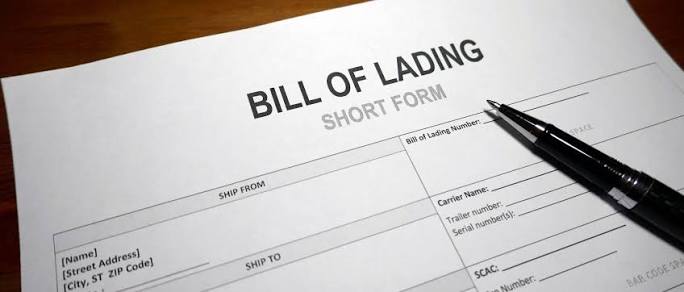
In LCL shipping there are usually two bills of lading:
- The master bill of lading (MBL) is issued by the ocean carrier for the whole consolidated container.
- The house bill of lading (HBL) is issued by your forwarder for your portion of the cargo inside that container.
Your HBL is your contract of carriage and your proof of ownership of the goods. Check the shipper, consignee, notify party, cargo description, weight, volume and number of cartons before the bill is finalized. Corrections after the vessel sails cost time and money.
Commercial invoice
The commercial invoice describes the goods, their value and the parties to the transaction. Customs uses it to assess duties and verify the entry. Keep the description, quantities and values consistent with the packing list and the bill of lading.
Inconsistent descriptions across documents are one of the most common reasons for US customs delays. Use the exact same wording on every document.
Packing list
The packing list itemizes every carton or pallet in the shipment. It shows:
| Field | Detail |
|---|---|
| Carton marks | Labels on the outside of each box |
| Carton numbers | Sequential numbering with total count |
| Contents | What is inside each carton |
| Dimensions | Length, width and height |
| Weights | Gross and net weight per carton |
The packing list lets the warehouse verify the shipment at intake and lets destination teams identify your cargo during deconsolidation.
Certificate of origin and other documents
Depending on your goods and destination, you may also need:
- Certificate of origin, where required by the buyer or requested by customs.
- Inspection certificates for certain regulated goods.
- Insurance documents if you arrange cargo insurance.
- Power of attorney if your broker needs authority to clear your shipment.
Ask your forwarder which documents apply to your cargo. Requirements vary by commodity and by the terms of your sale.
How to avoid documentation mistakes
Follow these rules to keep your paperwork clean:
- Use identical descriptions across invoice, packing list and bill of lading.
- Double-check shipper and consignee names, addresses and zip codes.
- Confirm HS codes with your forwarder before the documents are issued.
- Send final documents at least 24 hours before the vessel sails.
- Keep a digital copy of every document for your records.
What happens if documents are wrong
If an error is caught after departure, the forwarder can usually issue a bill of lading amendment, but it takes time and carries a fee. If customs finds an inconsistency, the shipment can be held for examination, which adds days and may trigger storage charges at destination.
Who prepares each document
Knowing who owns each document prevents gaps and double work.
| Document | Prepared by | Issued to |
|---|---|---|
| Commercial invoice | Seller / exporter | Buyer, customs, forwarder |
| Packing list | Seller / exporter | Forwarder, customs, consignee |
| House bill of lading | Your forwarder | You (consignee) |
| Master bill of lading | Ocean carrier | Consolidator (your forwarder) |
| Certificate of origin | Exporter or chamber | Buyer, customs if required |
| Insurance certificate | Insurer | Shipper and consignee |
Your forwarder coordinates the transport documents, but the trade documents start with you and your supplier. Confirm each document’s owner early so nothing is missing when the cargo arrives at the warehouse.
Paperless and digital documents
Most forwarders today issue bills of lading in electronic form, which speeds up the process and removes the risk of lost paper originals. Ask whether your shipment can run on electronic documentation and whether your destination and trade terms accept it.
Keep a digital copy of every document regardless of format. You will need the invoice, packing list and bill of lading for customs, for your own records, and for any insurance claim.
When each document must be ready
Timing matters as much as content. Plan the document flow around the vessel schedule:
- Invoice and packing list: finalized before the cargo arrives at the warehouse.
- HS codes and commodity descriptions: confirmed at booking time, not at departure.
- House bill of lading draft: reviewed and approved before the vessel sails.
- Certificate of origin and other certificates: obtained while the cargo is in transit.
- US entry documents: handed to the clearance broker before the vessel arrives at the US port.
A simple rule keeps the whole chain on track: nothing should be created at the last minute. Every document that can be prepared early removes a potential delay later. The USLCL guide covers the document chain from factory to port in one place.
How USLCL Handles This
- We review your invoice, packing list and HS codes before booking, so errors are caught early.
- House bill of lading issued and checked with you before the vessel sails.
- Export documentation prepared as part of the LCL service.
- US customs coordination arranged with a licensed broker on your behalf.
Planning your first shipment? Prepare a freight inquiry and we will confirm exactly which documents your cargo needs.
Frequently Asked Questions
Who issues the bill of lading for LCL cargo?
Your freight forwarder issues the house bill of lading (HBL) for your share of the container. The ocean carrier issues the master bill of lading (MBL) for the entire consolidated container.
What is the difference between HBL and MBL?
The MBL covers the full container and is issued by the carrier to the consolidator. The HBL covers only your cargo and is issued by your forwarder to you. You operate on the HBL; the MBL is an internal document between carrier and consolidator.
Do I need a certificate of origin for a US LCL shipment?
Sometimes. It depends on the goods, the trade terms and what your buyer or customs requests. Confirm with your forwarder whether your shipment needs one.
Can I correct a bill of lading after the vessel sails?
Yes, but amendments take time and usually carry a fee. Review the draft bill before departure and confirm every field to avoid post-sailing corrections.