
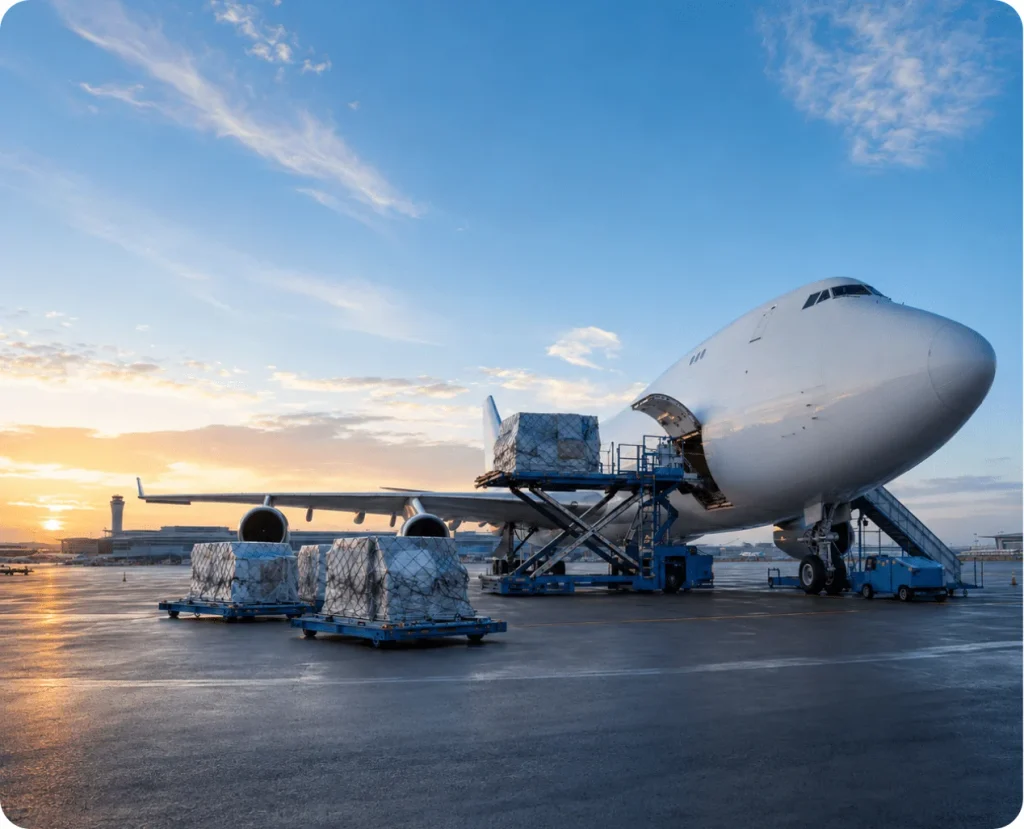
Air freight from China to USA moves goods by plane in roughly 3 to 7 days, dramatically faster than ocean, but at a much higher cost per kilogram. It is priced on chargeable weight, the greater of the actual gross weight and the volumetric weight, so a large but light carton can be billed as if it were heavy. Air makes sense for urgent restocks, high-value goods, and small batches where speed protects more margin than the freight saves.
This guide covers how air pricing works, how it compares with ocean, and the scenarios where air is the right call.
Air Freight Modes: Direct vs Transshipment
Air cargo moves on direct flights from major Chinese hubs like Shanghai, Shenzhen, and Hong Kong to US gateways such as Los Angeles, Chicago, and New York, or on transshipment routes that connect through a hub in between. Direct service is faster and has less handling risk, while transshipment is usually cheaper but adds a day or two and another handoff. The right choice depends on how tight the deadline is versus the budget.
Chargeable Weight: How Air Pricing Works
Unlike ocean, which bills by container or volume, air freight bills by chargeable weight. The carrier calculates volumetric weight as length times width times height in centimeters divided by 6000, then compares it to the actual gross weight and charges the higher of the two. A shipment of lightweight bulky goods therefore pays for the space it occupies in the aircraft, not just the scale weight, which is the single fact that surprises most first-time air shippers. A China to USA freight forwarder will quote on the chargeable weight after measuring the cargo.

Express Courier vs Freight Forwarder Air
For small parcels, the express couriers DHL, UPS, and FedEx offer door-to-door service with built-in clearance, but their published rates are high. Freight forwarders book air cargo space in bulk and can offer lower rates, especially on heavier shipments, though the service is usually airport-to-airport or door-to-airport with clearance arranged separately. A forwarder with a negotiated carrier account is often the better value once a shipment passes roughly 100 to 200 kg, while the couriers stay convenient for lighter, time-critical parcels.
Air vs Ocean: Transit and Cost Compared
| Factor | Air Freight | Ocean LCL |
|---|---|---|
| Transit time | 3 to 7 days | 20 to 45 days door to door |
| Pricing basis | Chargeable weight (kg) | Volume or weight (W/M) |
| Best for | Urgent, high-value, small | Cost-sensitive, larger volume |
| Handling risk | Lower (fewer handoffs) | Higher (consolidation and devanning) |
The trade-off is stark: air can be ten to twenty times the cost of ocean per unit, but it collapses the timeline from weeks to days. The decision is rarely about which is “better” and almost always about whether the speed is worth the premium for that specific order.
Typical Air Freight Transit and Cost Ranges
China to US air transit runs about 3 to 7 days depending on direct versus transshipment and the gateway. Costs are quoted per chargeable kilogram and move with fuel surcharges, capacity, and season, so any number here is a planning estimate rather than a fixed rate. The most reliable approach is to request a live quote once you know the carton dimensions and weight, because the chargeable weight decides the price.
When to Choose Air Freight
- Urgent restock when a best-selling SKU is about to go out of stock.
- High-value goods where faster transit reduces theft, damage, and capital tied up in inventory.
- Small batches too light to make ocean consolidation worthwhile.
- Seasonal spikes where missing the window costs more than the freight.
- Prototype or sample shipments that must arrive for a meeting or production line.
When Ocean LCL Is the Better Call
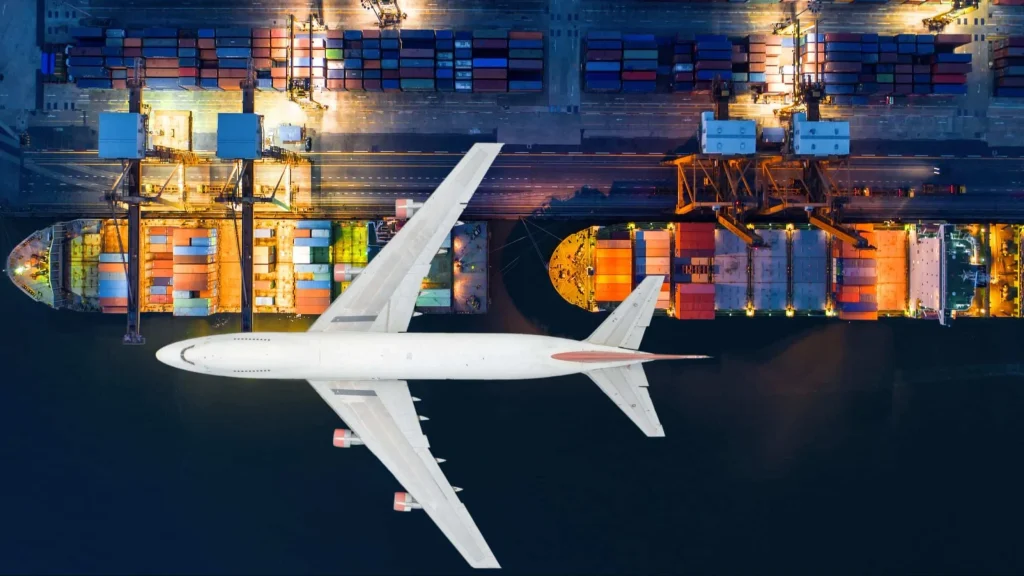
If the deadline is measured in weeks rather than days, ocean LCL is almost always the cheaper path, and for many importers the savings fund far more inventory than air would allow. The complete LCL guide from China to the USA explains how LCL cost and timing work when speed is not the deciding factor, and the LCL vs FCL comparison helps when volume approaches a full container. Air should be the exception you reach for on purpose, not the default.
Frequently Asked Questions
How is air freight from China to USA priced?
Air freight is priced per chargeable kilogram, which is the greater of the actual gross weight and the volumetric weight. Volumetric weight is the shipment dimensions in centimeters divided by 6000, so bulky light cargo is billed as if it were heavier. The forwarder measures the goods and quotes on that chargeable weight.
How long does air freight take from China to the US?
China to US air transit is typically 3 to 7 days, depending on whether the routing is direct or transshipped and which US gateway receives it. That is far faster than ocean LCL, which runs about 20 to 45 days door to door as covered in the LCL transit time guide.
When should I choose air over sea freight?
Choose air for urgent restocks, high-value goods, small light batches, seasonal spikes, or samples that must arrive on a fixed date. If the deadline allows weeks, ocean LCL is the lower-cost choice and usually the better fit for routine replenishment.
Express courier or freight forwarder for China to US air?
For light, time-critical parcels the express couriers DHL, UPS, and FedEx are convenient with built-in clearance, but costly. A freight forwarder with a negotiated airline account is typically cheaper above roughly 100 to 200 kg, though clearance may be arranged separately. Match the channel to the shipment weight and urgency.
Get an Air or Ocean Quote
If speed matters, we can quote air freight on your chargeable weight with a clear transit window. If the timeline allows, we will show the ocean LCL alternative so you can weigh the premium against the savings. Contact our team with your carton dimensions and deadline.