Choosing between LCL and FCL is one of the first decisions an importer makes. Both modes move the same cargo from China to the US, but they differ in cost structure, transit time, handling and security. Here is a practical comparison to help you decide.
What are the two modes?
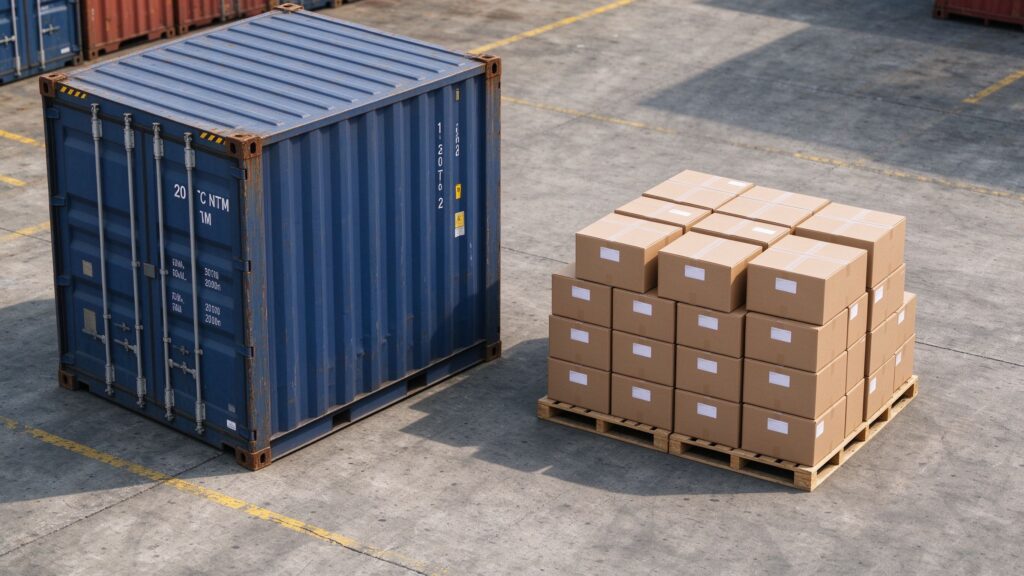
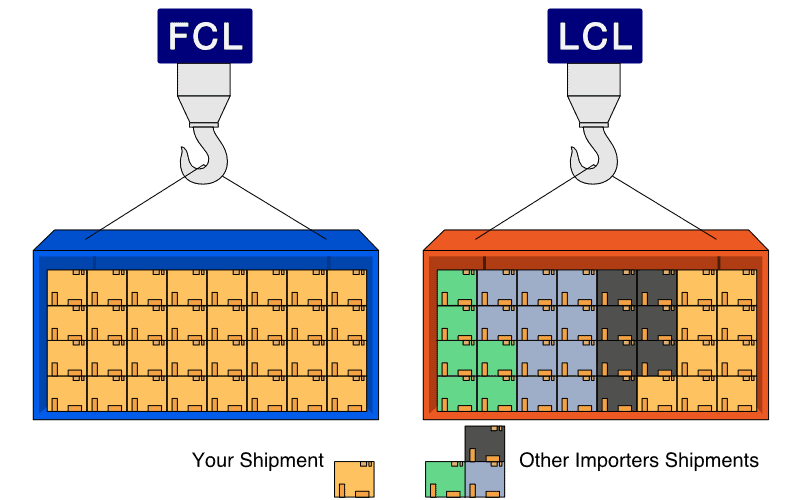
LCL, or less-than-container-load, means your cargo shares a container with other shippers. You pay for the volume you use, and a forwarder consolidates and deconsolidates the load for you.
FCL, or full-container-load, means you book an entire 20ft or 40ft container. Your goods travel as one unit, loaded once at origin and unloaded once at destination.
Cost comparison
The cost difference is usually the deciding factor. LCL pricing is based on chargeable volume or weight, with a minimum charge equivalent to about 1 CBM. FCL pricing is a flat rate per container regardless of how full it is.
| Factor | LCL | FCL |
|---|---|---|
| Billing basis | Per CBM or weight | Per container |
| Cost per unit of cargo | Lower for small loads | Lower for large loads |
| Extra fees | CFS handling, consolidation | Chassis, drayage, demurrage |
| Best for | 1 to 15 CBM | 15 to 18 CBM or more |
As a planning rule of thumb, LCL is usually cheaper below roughly 15 to 18 CBM. Above that, a full container typically wins on cost per cubic meter.
Transit time comparison
Both modes use the same ocean routes, so sailing time is similar for the same lane. The real difference is handling time.
- LCL adds a few days at origin for consolidation and at destination for deconsolidation.
- FCL moves faster after loading because the container is sealed and not opened until it reaches its destination.
- If your LCL cargo misses the consolidation cut-off, it can roll to the next vessel and add a week or more.
For time-sensitive cargo, FCL gives more predictable timing. For regular small shipments, LCL keeps the pipeline moving with acceptable delay.
Handling and security comparison
| Factor | LCL | FCL |
|---|---|---|
| Number of touches | More (packed, consolidated, deconsolidated, delivered) | Fewer (loaded once, delivered once) |
| Damage risk | Higher if poorly packed | Lower, cargo stays together |
| Security | Shared container with other shippers’ goods | Your goods only |
| Visibility | Shipment tracked as a unit | Container tracked door to door |
Good packing reduces the LCL handling risk considerably. If you ship fragile or high-value goods, FCL offers more protection. If your boxes are sturdy and well labeled, LCL handles them safely.
When to choose LCL
Choose LCL when:
- Your shipment is 1 to 15 CBM.
- You ship in smaller, regular batches.
- You want to test a market or product without committing to container volume.
- You prefer lower per-shipment cash outlay.
- Your cargo is sturdy, well packed and clearly labeled.
When to choose FCL
Choose FCL when:
- Your shipment is about 15 to 18 CBM or more.
- Your cargo is fragile, high-value or sensitive to handling.
- You need the most predictable timing.
- You want your goods to travel sealed and untouched.
- Your inventory plan justifies larger, less frequent shipments.
How to decide for your cargo
Estimate your cargo volume in cubic meters first. Measure the cartons, multiply length by width by height, and total the result. Then ask your forwarder for both an LCL quote and an FCL quote on the same shipment. Compare the total delivered cost, not just the freight line, because inland trucking and destination fees differ between the two modes.
Example cost comparison
To see how the two modes compare, use a simple worked example. Assume a 12 CBM shipment on the same China-to-US lane.
| Cost item | LCL (12 CBM) | FCL 20ft (about 28 CBM capacity) |
|---|---|---|
| Freight basis | 12 CBM billed at per-CBM rate | Flat container rate |
| Consolidation | Included in handling fees | Not needed |
| Deconsolidation | Included at destination | Not needed |
| Extra fees | CFS handling at both ends | Possible demurrage if held |
The numbers are illustrative, not a rate quote. Before comparing rates, review the USLCL guide for how each mode is priced on China-to-US lanes. The point is structural: LCL spreads its consolidation cost over your 12 CBM, while FCL spreads its flat rate over the container you rent. Below the break-even volume, LCL is usually cheaper in total; above it, FCL wins.
Volume estimation for your shipment
Before asking for either quote, estimate your cargo volume in cubic meters. Measure the cartons in centimeters, multiply length by width by height for each box, total the results and divide by 1,000,000. Add a small allowance for pallets and packing gaps.
With the same volume figure, ask your forwarder for both an LCL quote and an FCL quote. Comparing the two on identical cargo is the only honest way to see which mode fits. If you are new to importing, our shipping services list the full options we arrange from China.
How USLCL Handles This
- We quote both LCL and FCL on the same shipment so you see the real cost difference.
- China-to-US consolidation, documentation and US clearance handled in one process.
- Options for port pickup or door delivery in both modes.
- Clear advice on volume break-even points based on your actual cargo dimensions.
Ready to compare pricing for your cargo? Prepare a freight inquiry and our team will return both LCL and FCL options.
Frequently Asked Questions
What is the break-even point between LCL and FCL?
For most China-to-US lanes, the break-even sits around 15 to 18 cubic meters. Below that, LCL usually costs less; above it, FCL becomes cheaper per unit of cargo. Exact numbers depend on the lane, season and your delivery requirements.
Is FCL always faster than LCL?
Not by sailing time, which is the same on the same route. FCL is faster in practice because there is no consolidation or deconsolidation delay, so the total door-to-door time is usually shorter and more predictable.
Can I combine LCL and FCL shipments?
Yes. Many importers use FCL for high-volume staple goods and LCL for seasonal or trial products, letting each mode serve the shipment size it fits best.
Does LCL cost more per cubic meter than FCL?
Yes, the per-CBM rate for LCL is higher than the equivalent FCL rate, because LCL includes consolidation and deconsolidation work. LCL still wins overall for small loads because you are not paying for unused container space.
Related Reading
- What Is LCL Shipping? A Complete Guide for First-Time Importers
- LCL Shipping Costs from China to the US: Every Charge in Your Quote, Explained
- The USLCL Guide to Shipping from China
- See All Blog Posts
Ready to compare prices? Use our China-to-USA freight quote comparison checklist to check service scope, included charges and the final delivery endpoint before booking.