
Most LCL problems are avoidable. Across China-to-US shipments, the same mistakes appear again and again, and they cause the majority of delays, damage claims and invoice disputes. Here are the ten most common ones and how to avoid each.
Key Takeaways
- Measure every carton and confirm gross weight before booking. Re-measuring happens at the origin consolidation warehouse, and wrong numbers bring revised invoices.
- Use double-wall cartons, fill the empty space, and label every carton on two sides.
- Declare restricted goods honestly. Batteries and liquids need an MSDS, and lithium batteries need a UN38.3 test report before a carrier will book them.
- Keep the invoice, packing list and bill of lading identical. Respect the cut-off date and book early.
- Send full US delivery details, file ISF before loading, and insure the cargo. Carrier liability is often capped at $500 per package under US maritime rules.
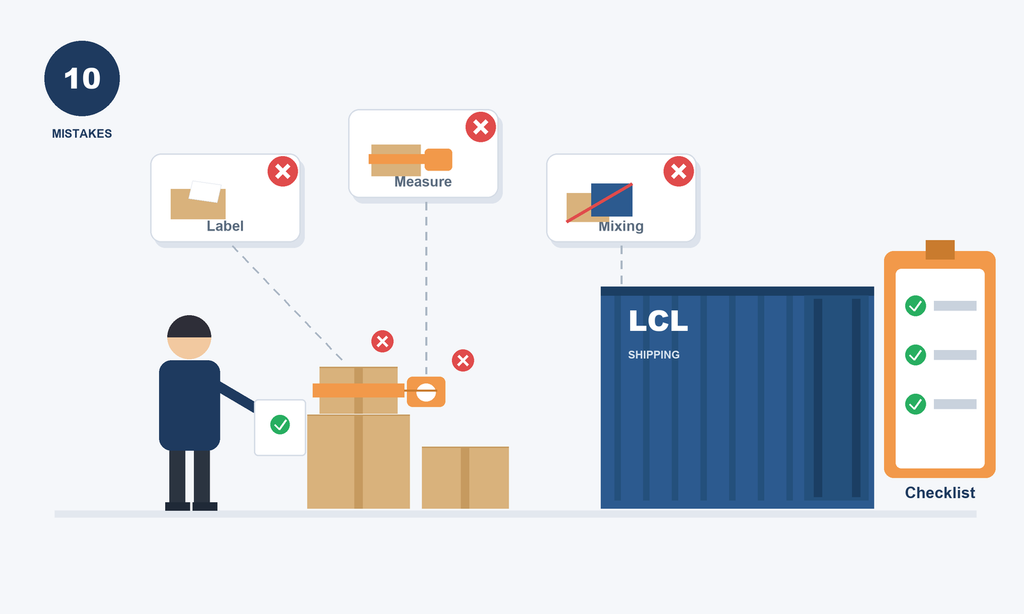
1. Guessing the cargo volume
Understating CBM or gross weight is the most expensive mistake. LCL quotes are based on chargeable quantity (the greater of volume or weight), so a wrong number leads to re-measuring at the origin consolidation warehouse and revised invoices.
Measure the outer dimensions of every packed carton, multiply length × width × height, and total the volume. If palletised, include the pallet height and base dimensions. Share the carton count and dimensions, not a guess.
2. Packing in weak cartons
Single-wall or reused boxes collapse under stacking pressure inside a shared container. The result is crushed cargo and damage claims that are hard to prove.
Use double-wall export-grade cartons sized to the contents. If in doubt, ask your forwarder about repacking at the warehouse.
3. Leaving empty space inside cartons
Cargo that shifts inside a box breaks itself and damages neighboring cartons. Empty space is the leading cause of transit damage.
Fill voids with cushioning so nothing moves. If you can hear movement when you shake the box, add more protection.
4. Skipping clear labels
Loose cartons in a shared container are identified by their labels. Missing or unclear marks can split your shipment during deconsolidation.
Mark every carton on at least two sides with consignee, destination, carton number and total count, plus your reference number.
5. Hiding restricted goods
Batteries, liquids and certain chemicals require advance approval. Undisclosed cargo gets rejected at the warehouse or held at customs.
Tell your forwarder what is inside every carton before booking, share HS codes, and provide required safety documents such as an MSDS or UN38.3 test report (for lithium batteries). A quick question before booking saves a failed shipment later.
6. Using inconsistent documents
When the invoice, packing list and bill of lading describe the goods differently, customs notices. Inconsistent documents are a top cause of clearance delays.
Use the exact same description, quantities and HS codes on every document, and review drafts before the vessel sails.
7. Missing the cut-off date
The cut-off is the deadline for cargo to arrive at the consolidation warehouse. Late arrivals miss the vessel and roll to the next sailing.
Plan a buffer between factory delivery and the cut-off, and confirm the warehouse address and receiving hours with your forwarder.
8. Booking at the last minute
Late bookings mean higher rates, less space and a higher chance of rolling, especially during peak season. The rate window you get depends on when you ask.
Book five to ten days before your cargo is ready, and three to four weeks ahead during peak season.
9. Forgetting destination details
An incomplete US address or unclear receiving instructions delays final delivery and can trigger storage charges. Small details cause the biggest end-of-trip problems.
Provide the full delivery address, zip code, contact person, delivery hours, and any special requirements—such as a liftgate (if you lack a loading dock) or appointment rules—before the vessel arrives. Missing those details is a leading cause of last-mile surcharges on US LTL and truck delivery.
Start customs and destination paperwork early. CBP requires the ISF (Importer Security Filing, or 10+2) at least 24 hours before cargo is loaded at the origin port, and your broker needs the invoice and packing list well before arrival. Clearing documents on time keeps the cargo moving at the US port.
10. Shipping without insurance
Ocean cargo can be damaged or lost even with careful packing. Without cargo insurance, carrier liability is strictly limited by law (often capped at $500 per package under US maritime rules), leaving you to absorb the loss.
Arrange cargo insurance and keep the declared value accurate. Confirm with your forwarder whether insurance is included or separate.
How to avoid all ten
Most of these mistakes are prevented by the same habits: accurate measurements, sturdy packing, clear labels, honest declarations, consistent documents, early booking and complete delivery details. Write them into your standard shipping checklist and review it before every shipment.
A quick reference checklist
Print this table and attach it to every booking file:
| Check | Done |
|---|---|
| Carton dimensions and total CBM measured | |
| Gross weight confirmed | |
| Commodity and HS codes shared | |
| Cartons packed and void-free | |
| All cartons labeled on two sides | |
| Invoice and packing list match | |
| Cut-off date and warehouse address confirmed | |
| US delivery address and contact ready | |
| Insurance arranged |
Run through the list at booking, again before loading, and once more before the vessel arrives. The third pass catches the details that slip between documents and reality.
When to ask your forwarder
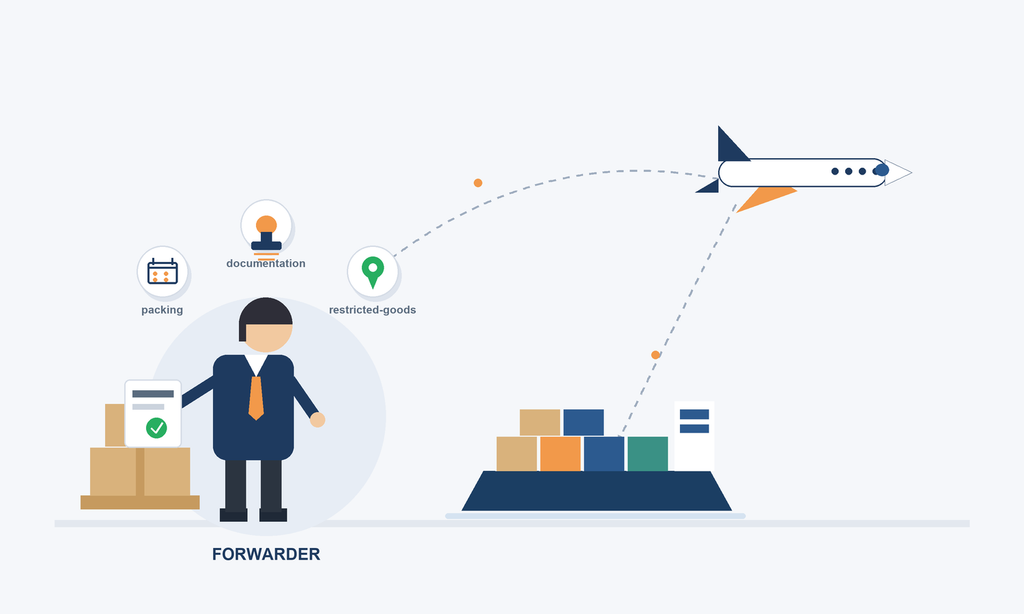
If any step is uncertain, ask before the cargo moves. Forwarders answer packing, documentation, restricted-goods and delivery questions daily. A five-minute question at booking saves a five-day problem at destination. There is no penalty for asking early and every advantage in doing so.
How USLCL Handles This
- We verify dimensions, weights and documents before booking, so errors are caught early.
- Clear cut-off dates and warehouse instructions shared with your supplier.
- Restricted-goods checks done before the cargo reaches the warehouse.
- Delivery details confirmed before the vessel arrives at the US port.
Shipping for the first time? Prepare a freight inquiry and our team will walk you through the checklist for your cargo.
Frequently Asked Questions
Which LCL mistake costs the most money?
Understating volume and weight is usually the most expensive. Carriers re-measure and re-weigh at the origin consolidation warehouse, then issue revised invoices before the cargo sails.
How do I know if my goods are restricted?
Ask your forwarder before booking, share your HS codes and describe the contents honestly. Batteries and liquids also need an MSDS, and lithium batteries need a UN38.3 test report. Carriers can refuse a booking without them.
Can the forwarder catch my packing mistakes?
A good forwarder checks dimensions, weights, labels and documents at intake, and will flag obvious problems. Final responsibility for packing quality remains with the shipper.
Do I really need insurance for LCL cargo?
Yes. Under US maritime rules, carrier liability is often capped at $500 per package unless you declare a higher value. LCL cargo also passes through more handling points than FCL, so a small premium protects against slow, disputed claims.