
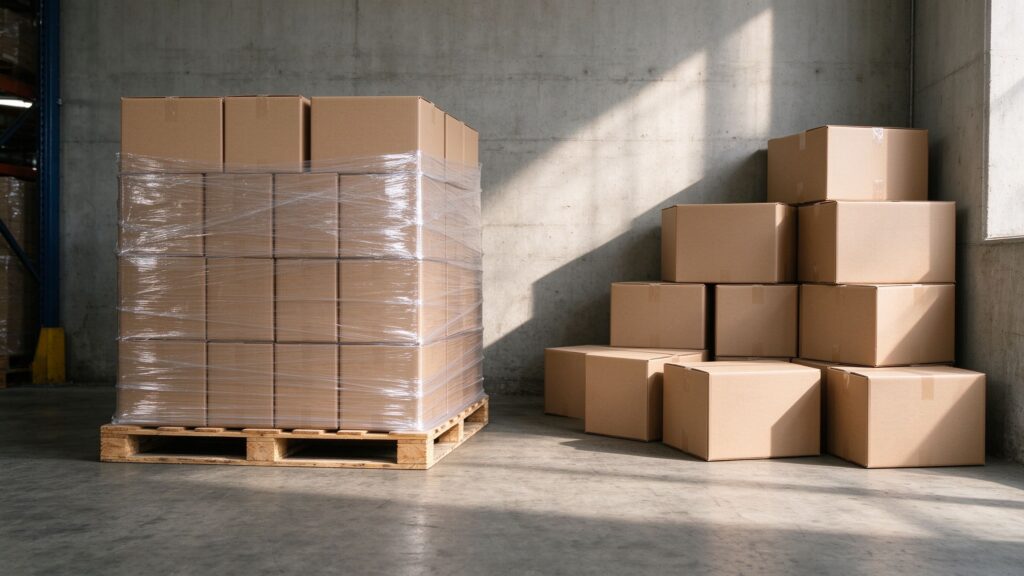
Choosing between cartons vs pallets is one of the first decisions in any LCL consolidation. Loose cartons move one by one. Palletized cargo moves as a single unit. The right choice protects your goods and controls the cost of shipping from China to the USA.
This guide compares cartons vs pallets in real LCL consolidation conditions. For the wider cost structure behind every quote, start with the complete China-to-USA LCL guide.
Key Takeaways
If you only read five lines about LCL consolidation, read these:
- Cartons vs pallets comes down to touches. Fewer touches mean less damage risk. Pallets cut the number of times your goods are handled.
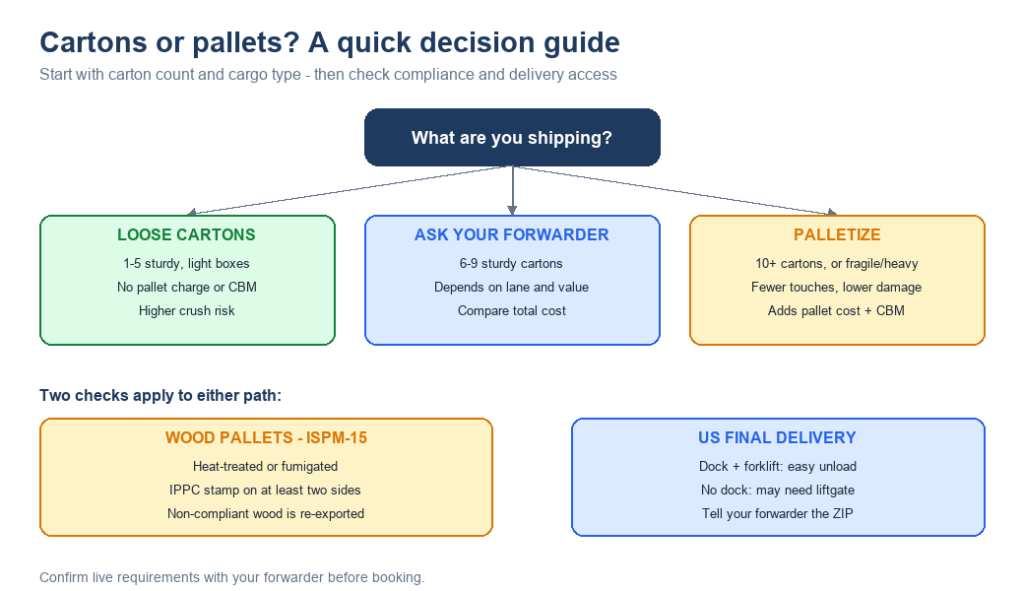
- Use loose cartons for a few sturdy, light boxes. Palletize at ten or more cartons, or when goods are heavy, fragile or mixed in size.
- A loaded pallet is not too tall for the container. The real limit is that you cannot stack another heavy load on top of a tall pallet.
- Wood pallets entering the US need ISPM-15 heat treatment and an IPPC stamp. Non-compliant wood is re-exported.
- Check your US delivery address. Without a dock or forklift, you may need a liftgate to unload a pallet.
What happens to cargo inside an LCL consolidation container?
Your goods pass through several touch points in LCL consolidation. They arrive at the origin warehouse and enter consolidation. Then they get loaded, sail, and wait for deconsolidation and final delivery in the US.
Loose cartons are handled one at a time at every stage. A palletized load moves as one unit. Each extra touch is a chance for damage or misrouting. That is why the cartons vs pallets choice in LCL consolidation shapes how safe your cargo stays.
The LCL packing guide covers preparation steps in detail. Here we focus on the unitization decision itself.
Cartons vs pallets: what is the real difference?
The difference is not just a wooden base. It changes handling, cost, damage risk and the way your goods fit into a shared container.
| Factor | Loose cartons | Palletized cargo |
|---|---|---|
| Handling | Moved one by one | Moves as one unit |
| Damage risk | Higher under stacking pressure | Lower, load stays stable |
| Cost | No pallet charge, no added CBM | Pallet cost plus pallet CBM |
| Best for | A few sturdy, light boxes | 10+ cartons, heavy or fragile goods |
| Main risk | Cartons crushed by heavier loads | No heavy stack on top of a tall pallet |
Neither option wins every time. Match the method to your cargo type, volume and delivery setup.
When do loose cartons make sense?
Loose cartons suit a small number of sturdy, lightweight boxes. A forwarder can slot individual cartons into odd spaces, which keeps container use high.
They also cost less. You pay no pallet charge, and you do not pay CBM for a wooden base. For one to five solid boxes, that saving is real.
The risk is stacking pressure. In a shared container, other shippers’ freight may sit above your cartons. Weak boxes can collapse. Use loose loading only when your cartons can carry the load.
When does palletizing pay off?
Palletizing straps and shrink-wraps your cartons onto one platform. That platform becomes the unit the warehouse moves from China to your US address.
At ten or more cartons, palletizing usually earns its cost. Heavy parts, glass, ceramics and electronics also benefit. The load stays together and arrives as one identifiable lot.
You trade a small premium for fewer touches and lower damage risk. For most multi-carton shipments, that trade is worth it.
How does stacking work inside an LCL consolidation container?
In LCL consolidation, weight and fragility decide the stacking order. Heavy pallets go at the bottom. Light cartons go on top. Fragile loads get a protected spot where nothing can crush them. The forwarder plans this before loading, which is why accurate cargo details matter at booking.
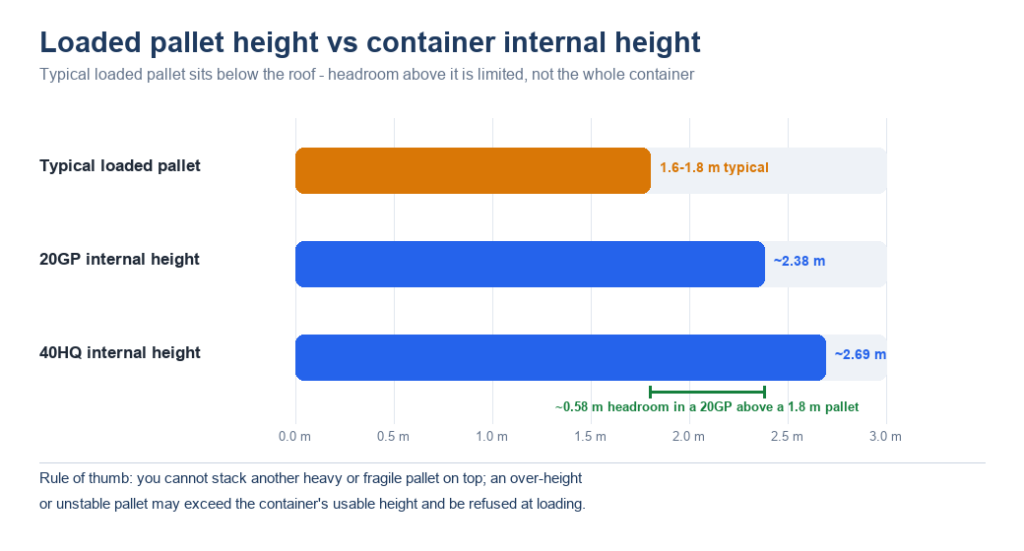
One point needs care. A typical loaded pallet stands about 1.6 to 1.8 metres tall. That is well below the roof of a standard container. A 20GP is about 2.38 metres inside, and a 40HQ is about 2.69 metres.
So the pallet is not too tall for the box. The practical limit is different. You cannot stack another heavy or fragile load on top of a tall pallet. An over-height or unstable pallet can also exceed usable space and be refused at loading.
Do wood pallets need ISPM-15 treatment for the US?

Yes. Solid wood pallets entering the United States must meet ISPM-15. The wood must be heat-treated (HT) under ISPM-15 and stamped with a clear IPPC mark, then stamped with the IPPC mark on at least two sides.
The CBP wood packaging rule follows the IPPC standard. A non-compliant pallet creates a real problem. US rules allow immediate re-export of the wood, and fumigation is not accepted as a remedy at the port. Delays and cost follow.
You can avoid the issue. Ask your supplier for heat-treated pallets with a clear IPPC stamp. Or use exempt options such as plywood or plastic pallets, subject to your forwarder and destination requirements. Confirm the rule before goods leave the factory.
Can I ship a partial pallet or a mixed load?
You do not need a full pallet to gain from LCL consolidation. Many forwarders accept partial pallets and consolidate them with other shippers’ cargo in the same container.
Label each part clearly and give the warehouse a packing list. A partial pallet keeps your goods together during deconsolidation. It also helps the crew place your lot correctly without opening every carton.
How does palletizing affect final delivery in the US?
Your packing choice reaches all the way to the delivery address. A site with a loading dock and a forklift can unload a pallet quickly. The driver simply moves the whole unit in.
Many small businesses and homes have no dock. There, the carrier may need a liftgate to lower the pallet to ground level. Without one, unloading can stall or cost extra. Tell your forwarder the delivery ZIP and site conditions before the vessel arrives.
Pallets often help here. One unit on a liftgate is faster than dozens of cartons moved by hand. Ask the carrier what equipment the destination needs, and confirm any liftgate fee in the quote.
Cartons vs pallets: which should you choose?
Start with carton count and cargo type. Then check wood packaging rules and delivery access. This decision guide sums up the path.
How much does palletizing add to LCL consolidation cost?
Palletizing adds two charges to your LCL consolidation invoice. You pay for the pallet itself, and you pay CBM for the space it occupies. Both are usually small next to the total freight.
Set that premium against the cost of a damaged or misrouted shipment. For a multi-carton order, the protection often pays for itself. For a handful of tough boxes, keep the saving and ship loose.
The LCL vs FCL comparison explains how volume affects your mode choice as shipments grow.
What pallet size works for ocean LCL consolidation?
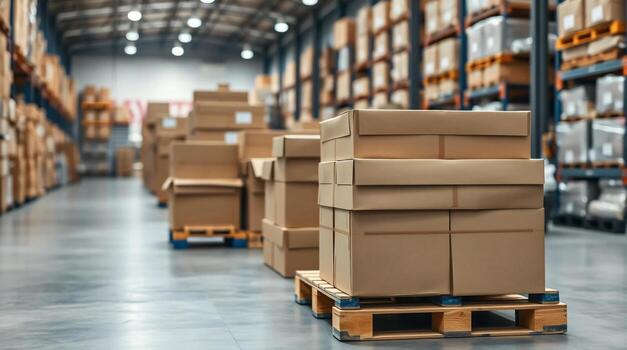
Ocean LCL consolidation commonly uses pallets around 100 x 120 cm or 120 x 120 cm. A loaded height of 160 to 180 cm is typical. Keep the load stable and within the container’s usable height and weight limits.
| Specification | Typical value |
|---|---|
| Pallet footprint | 100 x 120 cm or 120 x 120 cm |
| Loaded height | 160 to 180 cm |
| Loaded weight | Confirm with forwarder per lane |
| Wrapping | Strap plus shrink-wrap |
| Wood treatment | ISPM-15 heat-treated, IPPC-stamped |
Give your forwarder the exact pallet size and weight. They use those numbers to calculate chargeable CBM and to plan the load.
What are the signs your cargo should be palletized?
Use these signals as a guide, not a fixed rule. No single number decides the question for every shipment:
- You ship ten or more cartons in one order.
- A carton is around 20 to 25 kg and takes two people to move. Treat this as a comfort signal, not a legal threshold.
- Your goods are fragile, glass, ceramic or electronic.
- Cartons vary in size and would stack unevenly or crush the boxes below.
- You want the lot to stay identifiable through deconsolidation.
When two or more signals apply, palletizing usually pays off. Look at total carton count and uneven box sizes. The risk of a weak lower layer collapsing often matters more than weight alone.
How USLCL Handles This
- We confirm whether your cargo should move loose or palletized before you book.
- Our consolidation warehouse offers palletizing and shrink-wrap on request.
- We plan loading so heavy pallets sit low and light cartons ride on top.
- We share clear packing and ISPM-15 guidance with your supplier before delivery.
Not sure how to unitize your cargo? Prepare a freight inquiry and our team will confirm the safer option for your shipment.
Frequently Asked Questions
Does palletizing increase my LCL shipping cost?
Slightly. The pallet adds a small charge and its volume raises chargeable CBM. That increase is usually minor compared with the cost of a damaged or misrouted shipment.
Do I need ISPM-15 pallets for shipping to the US?
Yes. Solid wood pallets must be heat-treated (HT) under ISPM-15 and stamped with a clear IPPC mark and carry the IPPC stamp. Non-compliant wood can be re-exported. Plywood or plastic pallets are exempt options, subject to your forwarder’s rules.
Can my forwarder palletize my cargo for me?
Most forwarders offer palletizing and shrink-wrapping at the consolidation warehouse for a fee. Ask when you book and confirm the cost in the quote.
Will a pallet need a liftgate at delivery?
If the US address has no loading dock or forklift, the carrier may need a liftgate to unload the pallet. Confirm the site conditions and any liftgate fee before the vessel arrives.
Are pallets included in the container volume calculation?
Yes. Pallet dimensions are measured into your total cargo volume, which is converted to chargeable CBM. Always give the pallet size, not just the carton size.