Peak season is the period when China-to-US ocean freight gets tight. Rates climb, space fills and LCL cargo waits longer at the consolidation warehouse. Knowing when the peak hits, and what to lock first, keeps your shipment on schedule.
This guide explains the timing, the rate rules and the steps that protect a booking. For the full cost structure behind every quote, start with the complete China-to-USA LCL guide.
Key Takeaways
If you only read five lines, read these:
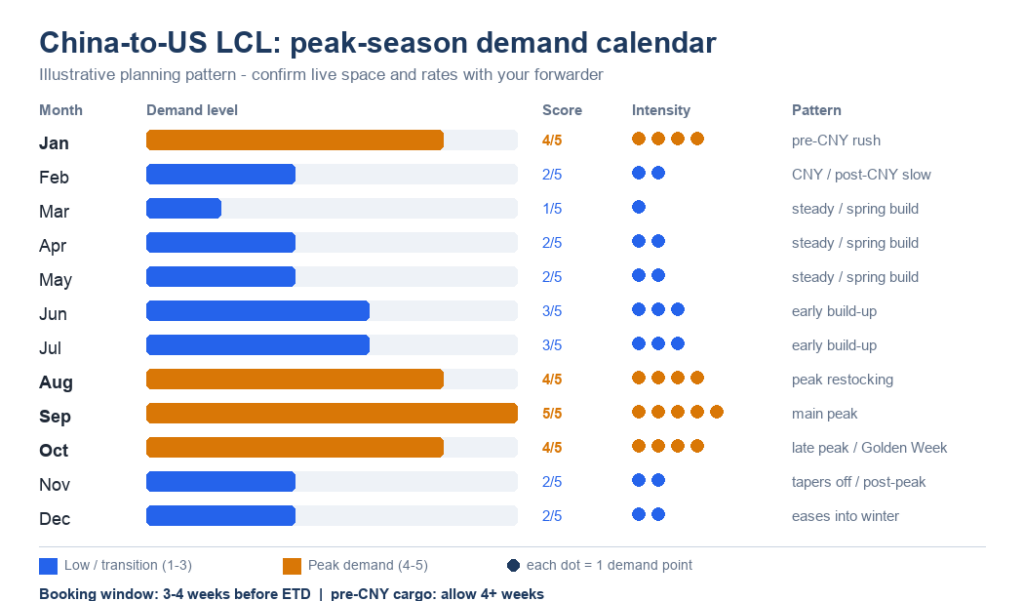
- The main peak hits August and September, stays busy in October, then tapers in November. A second rush builds three to five weeks before Chinese New Year.
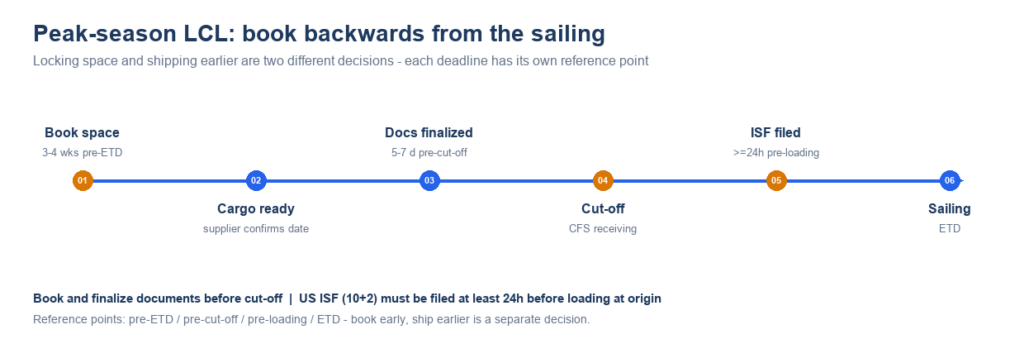
- Book LCL space three to four weeks ahead. Pre-CNY cargo needs four or more weeks.
- Peak quotes often stay valid only 7–14 days, or until a named sailing. Long fixed prices are rare.
- Compare the total delivered cost to your US ZIP, not just the $/CBM line. Inland rail or truck can change the winner.
- If cargo rolls, ask why the rate changed first. A blank sailing and a late rebooking are priced differently.
When is peak season for China-to-US shipping?
The main peak runs from roughly August through October. Holiday retail restocking drives it. August and September are the busiest months, so move holiday inventory then. October stays busy but carries more roll risk. Demand tapers in November.
A second surge builds in the three to five weeks before Chinese New Year. Factories wind down one to two weeks before the holiday. The holiday moves each year, falling anywhere from late January to mid-February. The rush moves with it.
Demand, not the calendar alone, sets the peak. Retail cycles, product launches and tariff deadlines all shift the timing. Confirm the exact window with your forwarder each season.
What changes during peak season
Several pressures arrive together. Each one changes the LCL bill or the delivery date.
| Change | What you see | Effect on LCL |
|---|---|---|
| Freight rates climb | Weekly updates, PSS and GRI notices | Higher per-CBM charges |
| Vessel space tightens | Bookings fill earlier | New cargo waits or rolls |
| CFS capacity fills | Longer consolidation queues | Slower stuffing and devanning |
| Blank sailings rise | Carriers skip scheduled calls | Cargo moves to a later sailing |
| Port congestion grows | Longer truck turnaround | Delayed pickup and delivery |
| Inland capacity tightens | Rail and truck slots fill | Slower IPI moves to inland ZIPs |
The consolidation layer adds its own pressure. When container space tightens, forwarders move committed cargo first. Small or late shipments wait longer.
How LCL shippers feel the squeeze
LCL cargo shares a container with other shippers. When the pool of containers shrinks, five problems show up first.
- Higher rates with a shorter validity window.
- Longer waits at the origin warehouse before stuffing.
- A roll to the next sailing when space is not confirmed.
- Slower deconsolidation at a congested US port.
- Tighter inland rail or truck capacity for US inland points.
None of these are fully avoidable. All of them are manageable with early decisions. Transit time by stage shows where the extra days usually appear.
How to plan ahead for peak season
These decisions shape your timing, stocking and batching. Use them to protect the schedule.
- Book three to four weeks ahead of your cargo-ready date. Allow four or more weeks for pre-CNY cargo.
- Confirm cut-off dates and vessel schedules before you promise a delivery date to your customer.
- Move holiday inventory in August and September rather than October. Confirm the sailing when you lock the booking. Booking early and shipping early are two separate decisions.
- Split large orders into two LCL batches, so one delay does not stop the whole shipment.
- Finalize documents early. Confirm invoices and packing list before cut-off, and file the US ISF at least 24 hours before loading.
Control cost during peak
Peak rates are market-driven. Focus here on the price you actually pay, not the booking calendar.
- Check the validity window, not just the rate. Peak quotes often hold seven to fourteen days, or only until a named sailing. Long fixed-price guarantees are rare.
- Ask what can still change the price. A PSS or GRI can land after you accept the base rate.
- Combine smaller orders into fewer, larger LCL shipments to cut per-unit handling.
- Compare total delivered cost, not the ocean line alone. Add origin handling, destination CFS and inland delivery.
- Avoid last-minute air freight. It costs far more than an early ocean booking.
A rate means little once it expires. Read the validity date, the surcharge list and the exclusions before you compare two quotes. Choosing the right China-to-US freight forwarder helps you judge the service behind the number.
How to monitor the market before you book
You do not need a paid rate service. Watch three signals before you commit.
- Your forwarder’s weekly rate updates. Check the direction against a public benchmark such as the Freightos Baltic Index.
- Container space on your preferred sailings, shared by your forwarder.
- Congestion news for your gateway, including port queues and inland rail or truck delays.
When rates climb and space fills fast, move the booking forward. The market usually signals pressure before it peaks.
Peak season checklist
Keep this checklist visible during the peak months.
| Action | Timing |
|---|---|
| Confirm cargo details and supplier date | As early as possible |
| Book LCL space | 3–4 weeks before cargo is ready (4+ pre-CNY) |
| Check quote validity and surcharges | On every quote |
| Finalize documents | 5–7 days before cut-off |
| Confirm cut-off and vessel schedule | Weekly during peak |
| Prepare US delivery details | Before the vessel arrives |
What to do if your cargo rolls
Cargo still misses its vessel sometimes. Act fast.
- Confirm the next available sailing and its new cut-off.
- Ask why the rate changed. A blank sailing or carrier delay may keep your original rate, or leave room to negotiate. A rebooking after late delivery, missing documents or a market increase usually takes the new sailing rate.
- Tell your customer the new ETA as early as you can.
- Adjust onward delivery and warehouse bookings for the new arrival date.
A roll adds transit time, not a crisis. Clean paperwork helps you clear US customs on time. CBP sets out the basics in its importing into the United States guidance. Compare alternative gateways on our routes overview.

How peak season interacts with your gateway
Gateway choice matters more in peak season. When west coast ports congest, some shippers route through east coast or Gulf gateways. They trade a longer ocean leg for shorter inland delivery. When east coast capacity fills early, west coast entries become the faster option again.
For LCL, watch two more factors after the ship docks. First, the destination CFS deconsolidation queue. Second, the inland truck or rail schedule, known as IPI.
A west coast arrival can clear the port fast. It can still crawl to a midwestern inland point if rail capacity is tight. A longer east coast voyage may beat it to some Midwest ZIP codes with direct trucking.
Judge the route by your final delivery ZIP and the current deconsolidation queue, not by port congestion alone. Ask your forwarder to compare both full paths. Our Los Angeles LCL port guide shows what the west coast option includes.
How USLCL Handles This
- Early booking windows and clear cut-off dates shared in advance.
- Space confirmed with the carrier before you commit.
- Rate validity stated on every quote, so you know what is locked.
- Contingency options, including alternative sailings and gateways, during peak.
You can check any ocean intermediary through the Federal Maritime Commission. Planning a peak season shipment? Prepare a freight inquiry and our team will confirm space and timing for you.
Frequently Asked Questions
When should I book LCL space for peak season?
Book three to four weeks before your cargo is ready, and four or more weeks for pre-Chinese New Year cargo. Finalize documents five to seven days before cut-off, and file the US ISF at least 24 hours before loading. Last-minute bookings face the highest rates and the greatest roll risk.
Can I avoid peak season entirely?
If demand allows, ship holiday inventory in August and September, and move non-seasonal cargo in the quieter first quarter. Your own sales cycle usually determines how much flexibility you have.
Why do LCL rates rise during peak season?
Vessel space and container capacity tighten while demand climbs. Carriers add peak season surcharges and general rate increases. Consolidation space becomes scarcer, and those pressures push LCL rates up together.
What does a blank sailing mean for my LCL cargo?
A blank sailing is a scheduled vessel call that is skipped. Your cargo rolls to the next available sailing and transit time grows. Booking early and confirming schedules reduces the risk. If a confirmed shipment rolls, ask whether your original rate still applies.