TIMING · PEAK SEASON 2027
The LCL China USA peak season 2027 runs mainly from August through October, when US retailers restock for Black Friday and Christmas. For less-than-container-load (LCL) shippers, that means tighter consolidation space, climbing per-CBM rates and a higher chance of rolling to a later sailing if the booking is late.
This guide maps the 2027 month-by-month calendar on the China–US lane, shows when space and rates tighten, how far ahead to book LCL cargo for holiday restock, and where West Coast and East Coast timing differ. It focuses on the 2027 calendar; the evergreen mechanics of peak-season planning are covered in our general peak-season guide.
Key Takeaways
If you only take a few points from this guide, make them these:
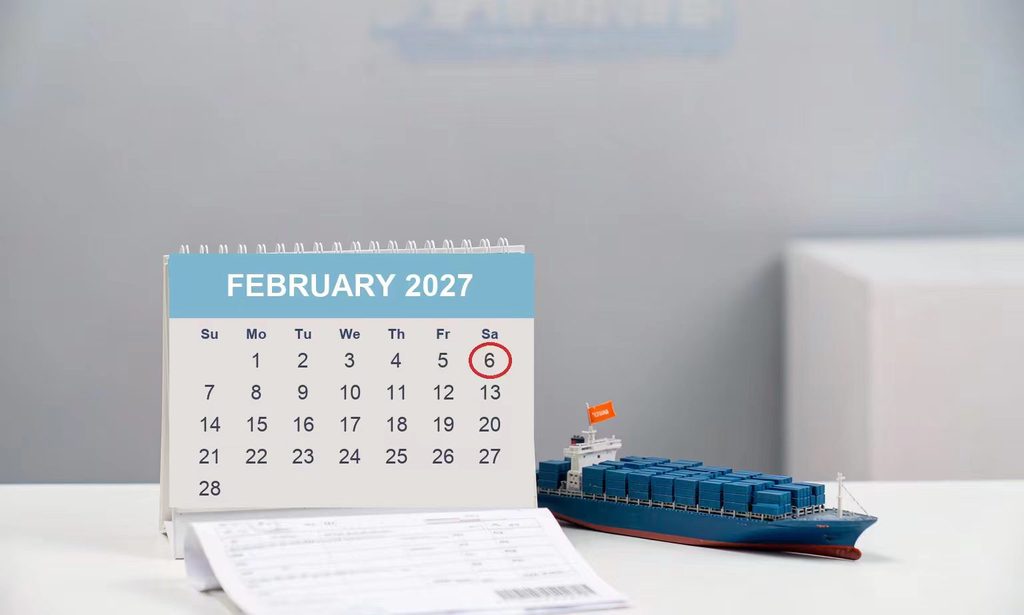
- The core LCL China–USA peak runs August through October 2027 (US holiday restock), with possible spillover into early November; a shorter second rush hits early-to-mid January before the February 6 Chinese New Year.
- Book LCL three to four weeks before cargo is ready — four weeks or more for August/September sailings or East Coast deliveries — and lock a confirmed sailing when the delivery date matters.
- Expect seasonal rate increases relative to the slack season, plus shorter rate validity, longer consolidation waits and possible blank sailings during the core months.
- West Coast door-to-door runs about 20–30 days off-peak but 30–40 or more days during the August–October core peak due to CFS backlog; East Coast adds roughly two weeks.
- With heavy 2027 vessel deliveries, capacity may loosen — compare quotes from several forwarders, as bargaining room could be larger than in 2024–2025.
The short version
- Core peak: August to October 2027, driven by Christmas and Black Friday restocking; pressure can spill into early November.
- A shorter second rush hits January to early February 2027 before Chinese New Year — planned separately in our CNY 2027 guide.
- Book LCL three to four weeks before cargo is ready; book earlier for August and September sailings.
- Expect higher rates, shorter rate validity, longer consolidation waits and occasional blank sailings during the core months.
- March to June is the softest window on the lane for non-seasonal cargo.
The 2027 peak season calendar: China to the USA
Demand on the trans-Pacific lane follows a repeating seasonal rhythm. Exact month strength shifts with retail orders and carrier capacity, but the windows below are the planning framework most importers use:
| Month 2027 | Lane condition | LCL planning stance |
|---|---|---|
| March – June | Slack season; softest rates, ample space | Best window for non-seasonal cargo and repeat orders that can wait. |
| July | Demand begins building; space still reasonable | Start booking August production and confirm supplier readiness. |
| August – October | Core peak: holiday restock, space tightens, rates climb | Book three to four weeks ahead; lock confirmed sailings; avoid last-minute bookings. |
| November | Pressure eases after the holiday shipping window | Remaining holiday cargo may still face residual congestion; compare rate validity before booking. |
| December | Quiet between peaks | Suitable for non-urgent cargo, subject to year-end warehouse and holiday closures. |
| January – early February 2027 | Pre-Chinese New Year rush | Covered in the CNY 2027 guide; space fills fast ahead of the factory shutdown. |
The August–October core is the period that most often decides whether holiday inventory reaches US shelves on time.
What tightens for LCL during peak season
LCL cargo depends on a forwarder filling a shared container before the vessel closes. When overall demand climbs, several pressures hit consolidation at once:
| Change | Effect on your LCL shipment |
|---|---|
| Freight rates climb | Higher per-CBM charges, often with shorter validity periods. |
| Vessel space fills earlier | Bookings close sooner; late cargo waits for the next sailing. |
| CFS capacity fills | Longer consolidation waits at the origin warehouse. |
| Blank sailings increase | Some scheduled vessels are skipped, pushing cargo to later departures. |
| Port congestion grows | Slower discharge, deconsolidation and truck turnaround at destination gateways. |
Small shipments feel these pressures first: forwarders tend to prioritize committed, consolidated cargo, and late LCL bookings are the most likely to roll.
Space and rate windows: when to book for each peak month
The booking lead time that works in June no longer works in September. Use these planning windows:
- July bookings: the standard three-to-four-week lead time is usually enough; space remains available on most sailings.
- August and September: book four weeks ahead where possible, especially for East Coast cargo; confirm the sailing rather than a floating window.
- October: rates and space reflect the tail of the peak; ask for the rate validity date before comparing quotes.
- November and December: softer conditions return, but year-end closures at warehouses and ports can add small delays.
If your forwarder offers a fixed-rate window, locking it early protects against weekly rate moves; compare the total delivered cost rather than the headline ocean line alone. Our LCL shipping cost guide explains what each charge group covers.
West Coast vs East Coast timing in peak season
Peak congestion does not hit both coasts identically. The South China to Los Angeles and Long Beach lane carries the most frequent sailings and the fastest ocean transit, while all-water East Coast routing to New York/NJ, Savannah or Houston takes roughly two weeks longer.
| Lane | Typical door-to-door LCL transit | Peak-season note |
|---|---|---|
| China to US West Coast | About 20–30 days | Highest sailing frequency; watch LA/Long Beach congestion during the core peak. |
| China to US East Coast | About 32–45 days | Start the booking earlier to absorb the longer ocean leg and possible port delays. |
Route selection and gateway options are detailed on our routes page; transit stages are broken down in the LCL transit time guide.
Planning rules for the 2027 peak
- Move holiday inventory in August and September rather than October, when space is hardest to secure.
- Book three to four weeks before cargo is ready; lock a confirmed sailing when the delivery date matters.
- Finalize documents five to seven days before the vessel so nothing waits at the last step.
- Split large orders into two LCL batches so a delay on one does not stop the other.
- Compare the total delivered cost — origin handling, ocean, destination charges and delivery — not just the freight headline.
- Watch your forwarder’s weekly rate and space updates; when both start tightening, move the booking forward.
Get a 2027 peak-season LCL quote
Tell us your origin city, US destination, commodity, carton dimensions, weight and required delivery date. We check available sailings for your target month, confirm the LCL cut-off and return an itemized quote with exclusions and validity. For background on how LCL works, see the main LCL guide.
Planning a 2027 peak-season shipment? Prepare a freight inquiry and our team will confirm space and timing for your target month.
Frequently Asked Questions
When is peak season for China to USA LCL shipping in 2027?
The core peak runs August through October 2027, driven by US holiday restocking, with possible spillover into early November. A shorter second rush occurs in January to early February before Chinese New Year 2027.
How far ahead should I book LCL space for peak season 2027?
Book three to four weeks before your cargo is ready, and four weeks or more for August and September sailings or East Coast deliveries. Last-minute bookings in the core peak face the highest rates and the greatest roll risk.
Why do LCL rates rise during peak season?
Rates rise because vessel space and container capacity tighten while holiday demand climbs. Consolidation space becomes scarcer as warehouses queue for the last containers, pushing per-CBM LCL rates up with ocean freight.
Should I ship holiday cargo before the core peak?
Yes where your sales cycle allows: August and September sailings give more space, better rate stability and a larger buffer against delays than October bookings. Non-seasonal cargo can wait for the softer March–June window.
Related Reading
- LCL China to USA Before Chinese New Year 2027: Booking Deadline
- Peak Season Shipping from China to the US: When It Hits and How to Plan
- How Long Does LCL Shipping from China to the USA Take?
- LCL Shipping Costs from China to the US: Every Charge in Your Quote
- The USLCL Guide to Shipping from China
- See All Blog Posts